Stock Dividends - A Complete Simple Guide
What is a Dividend?
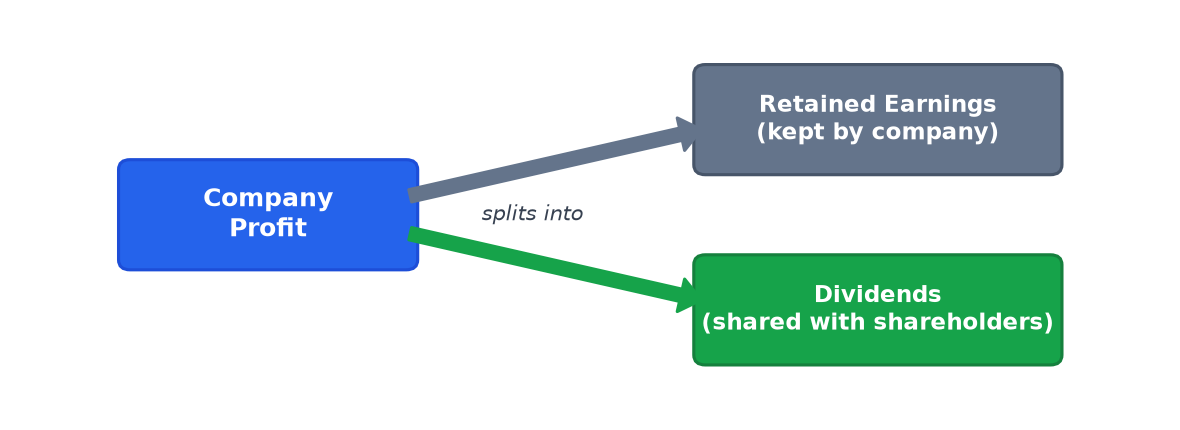
Think of it this way: When a company makes profit, it can share some of that profit with its shareholders (people who own the stock). This share of profit is called a dividend.
It's like getting a bonus just for owning shares in a company. The company says, "Hey, we made good money this year. Here's your share!"
Types of Dividends
Companies pay dividends in different ways. Here are the main types:
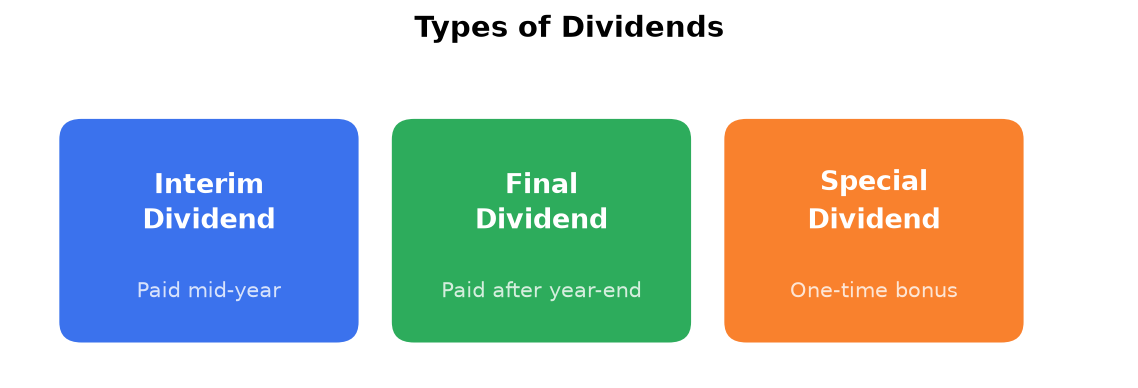
- Interim Dividend - The company doesn't wait for the year to end. It pays you something in the middle of the year itself.
- Final Dividend - Once the year is over and accounts are done, the company decides the final amount to pay.
- Special Dividend - This is rare. When a company sells an asset or has one-time extra profit, it might give a bonus payment.
Important Dates - The Timeline
When a company announces a dividend, there are 4 important dates you need to know. Missing even one can mean you don't get paid!
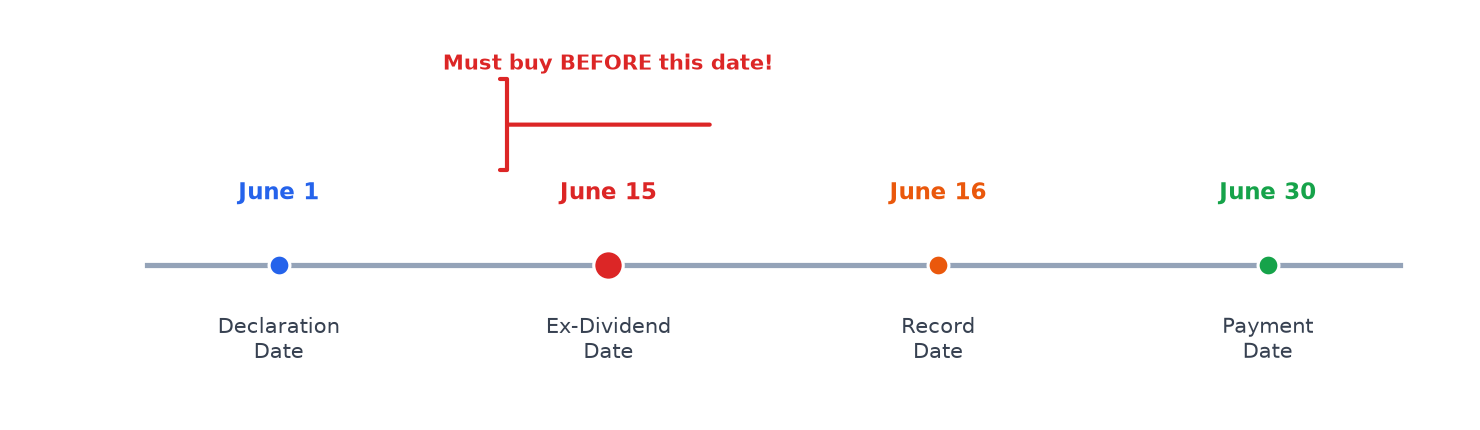
Why? In India, stock settlements take 1 business day (T+1). So if you buy on the ex-date, the shares won't be in your name by the record date. That's why the cutoff is one day before.
Example with Real Numbers
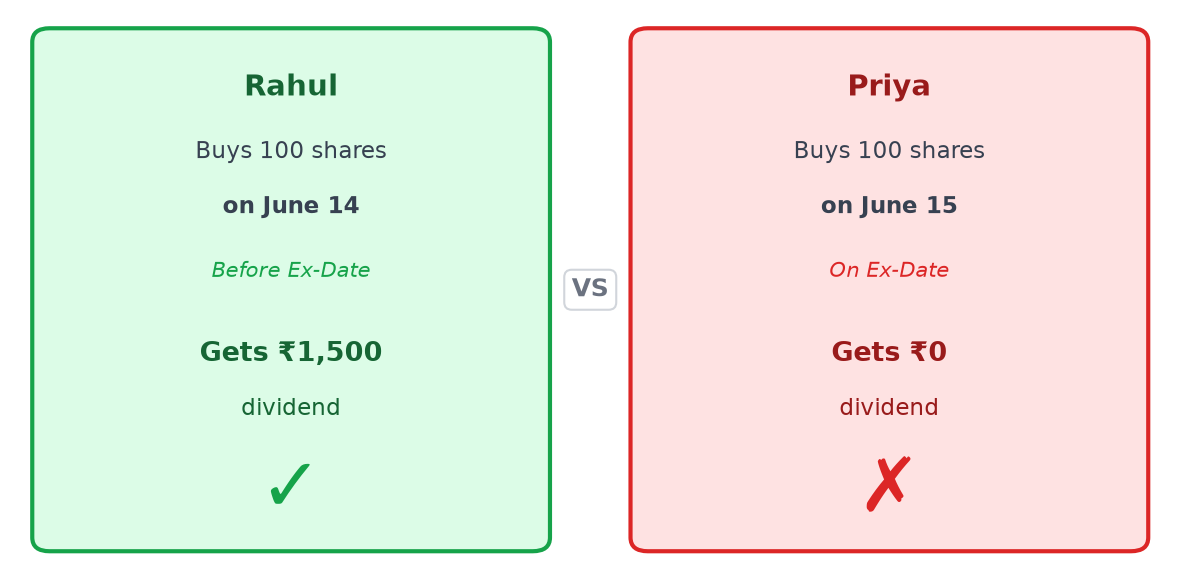
Let's make this crystal clear with an example:
Dividend declared: ₹15 per share (announced on June 1)
Ex-Dividend Date: June 15
Record Date: June 16
Payment Date: June 30
Dividend Yield - How to Compare
Dividend yield tells you how much return you're getting from dividends compared to the stock price. It's like comparing interest rates between banks.
Example:
- XYZ Ltd pays ₹15 dividend per share
- Stock price is ₹500
- Dividend Yield = (15 / 500) x 100 = 3%
This means for every ₹100 you invest in this stock, you get ₹3 back as dividend every year. Higher yield means more income for your money. But be careful - sometimes a very high yield means the stock price has fallen a lot (which is not a good sign).
What Happens to Stock Price on Ex-Date?
Here's something that confuses beginners: On the ex-date, the stock price usually drops by roughly the dividend amount. Don't panic - this is completely normal!
Why does this happen? Because from the ex-date onwards, new buyers won't get the dividend. So the stock is now "worth less" by that dividend amount.
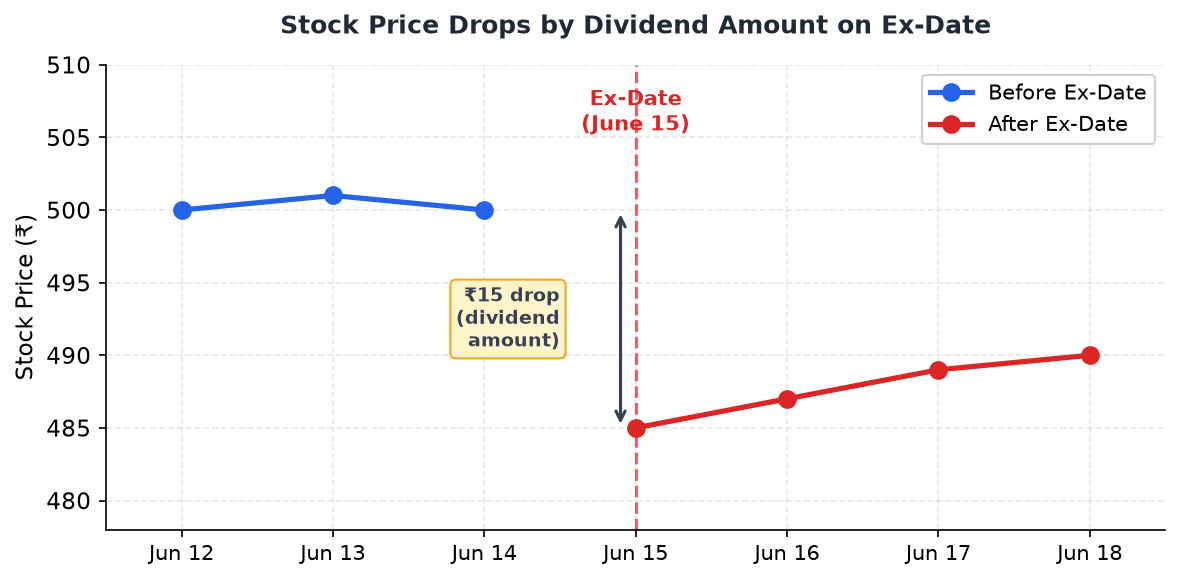
In our example: If XYZ Ltd stock was trading at ₹500 and the dividend is ₹15, the stock might open at around ₹485 on the ex-date. This is normal market adjustment - you haven't lost anything because you'll receive ₹15 as dividend.
Tax on Dividends in India
Yes, dividends are taxable in India. Here's what you need to know:
- Dividends are added to your total income and taxed at your normal income tax slab rate. If you're in the 30% bracket, you'll pay 30% tax on dividends.
- TDS (Tax Deducted at Source): If the total dividend from one company exceeds ₹5,000 in a financial year, the company deducts 10% TDS before paying you.
- You can claim this TDS while filing your income tax return.
Quick Tips
- Buy before ex-date if you want the dividend. Even one day late means no dividend.
- Don't buy just for dividends - check if the company is fundamentally strong. A weak company paying high dividends may not sustain it.
- High dividend yield is great, but check sustainability. If a company pays more dividend than it earns, it's using up its reserves. That won't last.
- Dividends are taxable - factor this into your returns. After tax, your effective yield is lower.
- Look for consistent dividend payers. Companies that have paid dividends for 10+ years are usually more reliable.
- Reinvesting dividends can significantly grow your wealth over time thanks to compounding.